
Defining a relationship to transform roleplay
Five relationship tropes for your game
Recently, I got a rare chance to hang up my GM cape and play a D&D character.
The adventure was great, but I also had a lot of fun roleplaying the relationships with my fellow party members: my butler and a sorcerer hireling.
So when the GM asked how much time we had spent creating these relationships in advance - they were surprised to hear the answer was very little.
Instead we had stumbled into a simple technique that I wish I’d discovered sooner.
For full disclosure, both my fellow players are also my brothers. We have over 30 years experience of mucking about together which will give us a head start on almost any table.
But while this is not the first time we’ve played D&D together, it’s the first time I’ve seen those roleplay sparks so easily catch fire.
The difference, I think, is that we had accidentally settled upon relationship tropes.
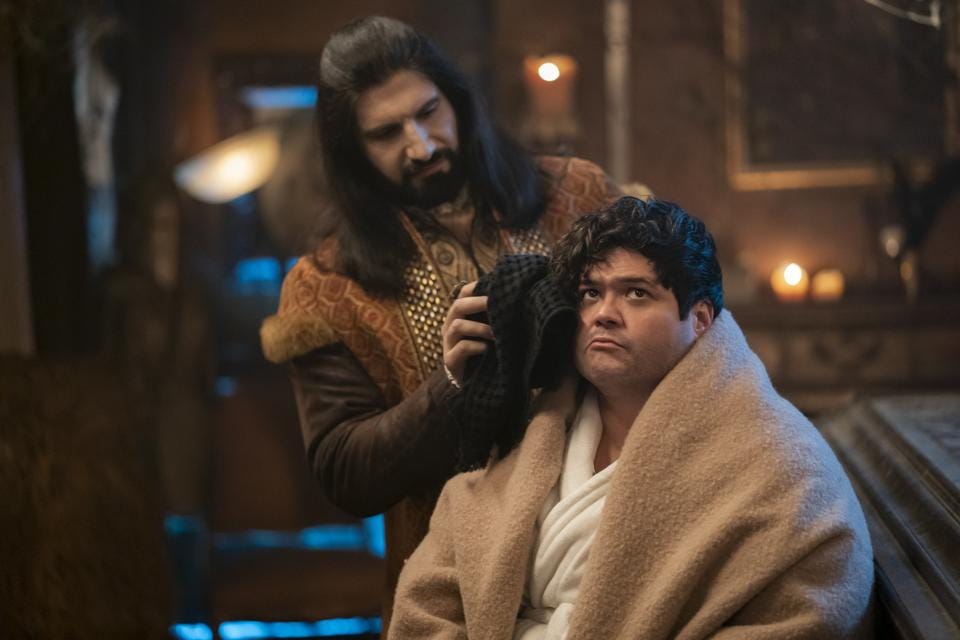
My older brother had messaged me a few days before to ask if my character, a noble, needed a guard. I instead suggested a butler, which in play turned into the ‘Clever servant’ (see below).
As the session began our younger brother quickly improvised that he was on my pay roll (“Fifty gold? I said fifteen gold”) and after a failed attempt to turn my butler against me, he moved into ‘Pushes buttons’ (see below) for the pair of us. He spent the rest of the night working through a list of mispronounced names for our characters and questioning our decisions.
In the aftermath, I started thinking about how I’ve seen many players develop complex shared backstories that felt less impactful than these simple relationship tropes we accidentally utilised.
Tropes can immediately set a tone and come pre-loaded with a library of references and inspiration.
So inspired by that session, I’ve created five ‘relationship tropes’ to use at your table. This is far from an exhaustive list however and I’d love to hear your suggestions for more in the comments.
A note of caution: These tropes are designed to exist in one direction, so you can have fun mixing and matching with another character - how does the Barbarian feeling ‘Protective’ towards the Bard play if they simply ‘Push buttons’ in return?
You should always discuss each relationship with the other player and regularly check in about how it is evolving. Even positive relationships have pitfalls that might adversely affect another player’s experience at the table if they are not on board.
Clever servant
This is as old as time and is typically characterised by someone who has lower social status, but higher intelligence.
While they publicly show deference they will often mock their master in ways that pass above their head. It’s also common for the servant to ease the master’s path in ways they cannot begin to understand, allowing them to believe they are responsible for their own good fortune.
Examples: Jeeves (P.G.Wodehouse), Guillermo (What we do in the Shadows), R2D2 (Star Wars)
Button Pusher
This character loves to tease and make fun of their companions. They are never mean or truly unkind, they always punch up and only ever down if someone truly reprehensible crosses their path.
This behaviour often masks their own inferiority or jealousy of others and can often be used as a method of confronting behaviour they find unacceptable.
Examples: Tony Stark (Iron Man), Dr Cox (Scrubs), Danhausen (WWE)
Completely loyal
This character shows deference and respect to their companion, following their orders and lead.
Being completely loyal should not be confused with blind loyalty, although publicly this character might support and defend their companion they will often choose to privately question decisions and guide them to a better path.
Examples: Alfred (Batman), Zoe (Firefly), Sam (Lord of the Rings)
Protective
This character goes out of their way to protect their companion from physical or psychological harm, sometimes in ways that might frustrate them.
This relationship is often paternal (biological or found family) but could also be through honour or duty.
Examples: Joel (The Last of Us), Steiner (FF9), Obi Wan Kenobi (Star Wars).
Grudging respect
This character might not like their companion, but they are forced to respect their skills and abilities. Even if they don’t enjoy their company, they begrudgingly acknowledge it is a useful one to keep.
Examples: Wolverine (Deadpool and Wolverine), Boromir (Lord of the Rings), Haymitch (Hunger Games)